Showing posts with label Farming. Show all posts

Monday, April 12, 2010

Honk 4 Ignernt Assholes

Oh, the irony!


You are not alone.

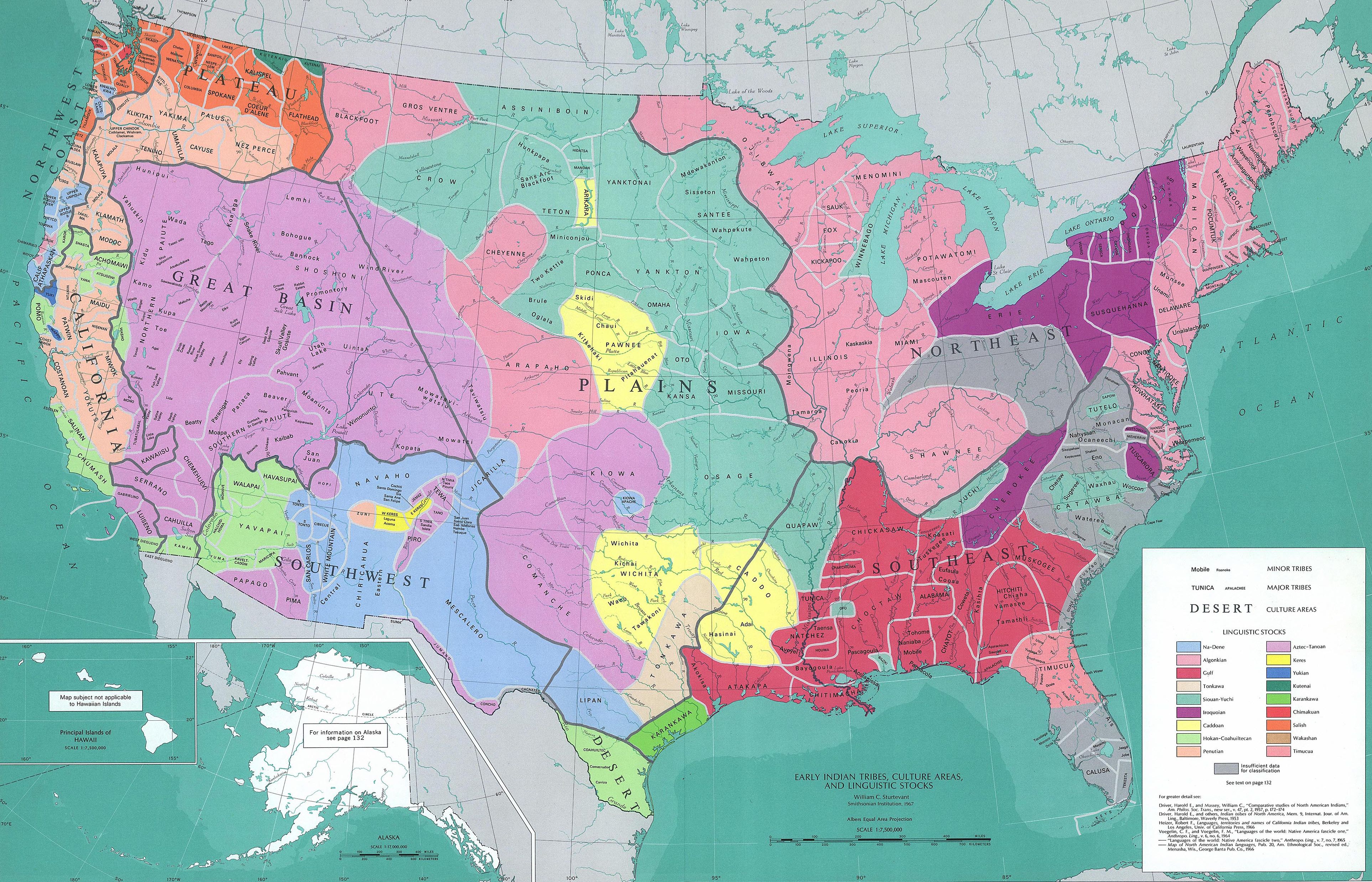
Just make sure you remember where "your country" came from and how you got it in the first place.


Conflicts generally known as "Indian Wars" broke out between American government and Native American societies. The Battle of Little Bighorn (1876) was one of the greatest Native American victories. Defeats included the Creek War of 1813-14, the Sioux Uprising of 1862, the Sand Creek Massacre (1864) and Wounded Knee in 1890.[68] These conflicts were catalysts to the decline of dominant Native American culture. By 1872, the U.S. Army pursued a policy to exterminate all Native Americans unless or until they agreed to surrender and live on reservations "where they could be taught Christianity and agriculture."

Of course. How the hell did the savages get by for 20,000 years, before whitey showed up, without knowing a damn thing about agriculture?

This land is your land, this land is my land
From California to the New York Island
From the Redwood Forest to the Gulf Stream waters
This land was made for you and me.


This land is my land, it is not your land
I've got a shotgun, and you don't got one
I'll blow your head off, if you don't get off
This land was made just for me.


You sure about that? Or do you just want the portion of it back that benefits you at the expense of others?

Wednesday, March 25, 2009

Top Five Countries

These five places make me glad I'm not in Obama's shoes right now.

Mexico
Secretary of State Hillary Rodham Clinton arrives in Mexico on Wednesday for what will be the first in a parade of visits by top administration officials, including President Obama himself next month, to try to head off a major foreign policy crisis close to home. They will find a country mired in a deepening slump, miffed by signs of protectionism in its largest trading partner, and torn apart by a drug war for which many in Mexico blame customers in the United States.

Pakistan
Now, as the Obama administration completes its review of strategy toward the region this week, his sudden ascent has raised an urgent question: Can Mr. Sharif, 59, a populist politician close to Islamic parties, be a reliable partner? Or will he use his popular support to blunt the military’s already fitful campaign against the insurgency of the Taliban and Al Qaeda?

Czech Republic
Transatlantic tension over the handling of the global economic crisis intensified Wednesday when the prime minister of the Czech Republic, which holds the European Union presidency, described the President Obama’s stimulus measures as the “way to hell.”

[...]

...Prime Minister Mirek Topolanek argued that the Obama administration’s fiscal package and financial bailout “will undermine the stability of the global financial market.”

Mr. Topolanek’s comments, only a day after he offered his government’s resignation following a no confidence vote, took European officials by surprise.

Whew! Feeling sick yet? We're not done!

Israel
Israel’s prime minister-designate, Benjamin Netanyahu, said Wednesday that the coalition he is forming would be a “partner for peace,” offering a pledge that seemed designed to reshape his reputation as a foe of the peace process with the Palestinians.

The promise brought a muted response from some Palestinians.

[...]

On Wednesday, Tzipi Livni, the foreign minister and leader of the centrist Kadima party, called the prospective coalition a government “conceived in sin,” according to The Associated Press.

United States
The Obama administration said Tuesday that it would move hundreds of federal agents to the country’s southern border to prevent a spillover of drug-related violence from Mexico, and that it would focus more efforts on stopping weapons and money from flowing south.

And...
Treasury Secretary Timothy F. Geithner on Wednesday pressed the case for expanding the government’s ability to take over and restructure ailing institutions that threaten to the broader financial system.

There's five already and I haven't even mentioned Iraq, Afghanistan, China or Russia. Holy shit.

Sunday, March 09, 2008

Farm Land Might Be The Best Investment

Having grown up on a farm I can tell you it was always uncertain but we were pretty lucky. Some years were better than others but we always survived without having to struggle for basic needs or worrying about having food on our table. I seem to remember my father complaining in the 70s that crop prices never rose even during inflationary periods. I wish he were alive now to see the prices.

My mother has always said we should keep the farm no matter what happens. My brother and I have never had much interest in farming and we have viewed the farm as an asset waiting to be sold so that we might put our share of the proceeds to "better use." I can't speak for my brother who is having his own financial struggles (as am I), but I'm starting to think the best use of the farm is to keep it. And the way things appear to be headed in the world, productive farm land might be as safe an investment as anything. not to mention a steady source of reliable income.
LAWTON, N.D. — Whatever Dennis Miller decides to plant this year on his 2,760-acre farm, the world needs. Wheat prices have doubled in the last six months. Corn is on a tear. Barley, sunflower seeds, canola and soybeans are all up sharply.

“For once, there’s great reason to be optimistic,” Mr. Miller said.

Naturally, surging prices means we pay more for basic staples at the supermarket so the extra income from higher crop prices is far from being all profit. Fertilizer and insecticide prices are higher, and diesel fuel has skyrocketed which also means higher costs to plant and harvest, so we'll have to wait and see if the end result means more money in the pockets of farmers. But global demand for agricultural products is definitely on the rise.
Many factors are contributing to the rise, but the biggest is runaway demand. In recent years, the world’s developing countries have been growing about 7 percent a year, an unusually rapid rate by historical standards.

The high growth rate means hundreds of millions of people are, for the first time, getting access to the basics of life, including a better diet. That jump in demand is helping to drive up the prices of agricultural commodities.

Farmers the world over are producing flat-out. American agricultural exports are expected to increase 23 percent this year to $101 billion, a record. The world’s grain stockpiles have fallen to the lowest levels in decades.

“Everyone wants to eat like an American on this globe,” said Daniel W. Basse of the AgResource Company, a Chicago consultancy. “But if they do, we’re going to need another two or three globes to grow it all.”

And there's the problem. No one on the globe needs to eat like an American and Americans would be wise to abandon the all-you-can-eat mentality and adopt more frugal and conservative standards. The problem of food shortages has the potential to eclipse our dependence on foreign oil. We are now facing a double whammy with escalating fuel prices in an era of inflation and recession in which prices for food basics are increasing at a far great rate than wages which, for many, are actually decreasing.

We would be wise to monitor this situation closely. Many of us may soon find we have more in common with our brothers and sisters in places like Nigeria than we realize.
Nigeria’s wheat imports in 2007 were forecast to rise 10 percent more. But demand was also rising in many other places, from Tunisia to Venezuela to India. At the same time, drought and competition from other crops limited supply.

So wheat prices soared, and over the last year, bread prices in Nigeria have jumped about 50 percent.

Amid a public outcry, bakers started making smaller loaves, hoping customers who could not afford to pay more would pay about the same to eat less. Sales have dropped for street hawkers selling loaves. With imports shrinking, mills are running at half capacity.

Welcome to the 21st century in an overpopulated world.