Showing posts with label US. Show all posts

Thursday, December 16, 2010

An American Problem

At the time of the auto industry bailout, it sure sounded encouraging when President Obama announced that we were ushering in an era of "creating new jobs, unleashing new prosperity and manufacturing the fuel-efficient cars and trucks that will carry us toward an energy-independent future.”

So, how's that working out, Mr. President?

Oh, of course.

But at least something is being sold, right?
In particular, what Mr. Obama called his “one goal” — having Detroit “lead the world in building the next generation of clean cars” — is nowhere near being achieved. While the idea of improving G.M.’s and Chrysler’s fuel efficiency was doubtless a politically popular justification for the bailout, American consumers have not embraced the goal with equal fervor. Sales of fuel-sipping compact and subcompact cars have actually dropped this year, while pickup and sport utility vehicle sales grew by double-digit percentages.

Woooo hoooo! It may not be green, and it may not be next-generation as promised, but at least sales are up! That has to be a good omen. But... who is buying?
Another troubling trend is an increase in fleet sales — the delivery of huge numbers of units to corporations and government agencies. While fleet sales improve short-term volume, the profit margins are slim and the practice can hurt long-term sales as consumers come to view the models as unsexy “fleet queens.” And Detroit has gorged on such sales in 2010, with some 32 percent of all vehicles from the Big Three sold through October going to fleet operators. Furthermore, a quarter of all the hybrids built by Detroit since President Obama took office have been bought by federal agencies, showing that enthusiasm for Detroit’s hybrids is limited somewhat to government fleet buyers.

In addition, even when it comes to the trucks and S.U.V.’s that Americans actually do want to buy, the bailed-out automakers are building vehicles faster than they can be bought. Inventory levels at both companies have ballooned this year, to the point where G.M. now has nearly three months’ worth of sales sitting on its lots...

Feeling better yet about the success of these bailouts?
Allowing new cars to pile up on lots may well be the most deadly of Detroit’s new-old bad habits, as the practice not only artificially inflates sales numbers (which, ridiculously, are booked upon production, not when a vehicle is driven off the lot), but also lead to yet more incentives, fleet sales, subsidized leases and subprime lending.

Sigh. I keep looking for a silver lining in this piece, but I'm not seeing it.

I know, I know, we can't expect a 180° turnaround in two years after decades of behavior, but overall this does not look at all like any lessons have been learned. In fact, it reminds me of the state we're in politically: a lot of promises about change, efficiency, and a brighter future while bending over backwards to maintain the status quo.

Sunday, July 04, 2010

A Message for the 4th

Remembering Howard Zinn.


On this July 4, we would do well to renounce nationalism and all its symbols: its flags, its pledges of allegiance, its anthems, its insistence in song that God must single out America to be blessed.


Right on, brother!

Tuesday, June 29, 2010

We Are All Slaves to Corporations

Stop me if you've heard this one before.

For the last few days I've been in one of my pessimistic dark blue funks which have me just wanting to give the hell up on just about everything. Clearly, I'd be better off if I'd just stop watching Michael Moore films because they definitely trigger these feelings of despair. However you may critique his work, his delivery, his attempts to make a citizen's arrest at AIG, or whatever, the bottom line is that he is correct in identifying a huge problem we have in this country which ultimately will lead to our downfall. And if you disagree with that, well, you might be part of the huge problem we have.

I suppose it's very easy for most of us to ignore what's going on, and just ride the awesome wave of life, getting our gravy from whatever work we can find, buying fun shit to distract us, and just observing passively all the things going wrong here, perhaps hoping someone will fix it eventually, and hoping it never directly impacts us in a negative way.

Sometimes I desperately wish I could just turn off and ignore.

I'm at the point where I don't even want to write about politics, whether it's a politician talking out of both sides of their mouth, a Supreme Court ruling, or even a little piece of positive news, rare as that is these days.

As I sit here watching President Obama's approval rating dropping like a stone from the level of 15 months ago, I keep wondering what will happen in the 2010 mid-terms and in the 2012 election. And then I see a poll such as this one, and I simply get bewildered.
Nine in 10 Americans -- including a majority of Republicans, Democrats and independents alike -- think U.S. energy policy either needs fundamental changes or to be completely rebuilt, a new CBS/ New York Times poll shows.

Just 6 percent think only minor changes are needed to the nation's energy policy, according to the poll, conducted June 16 - June 20.

That sounds like good news, right? Isn't this what most of us wanted in the 2008 election, change? The kind of fundamental wholesale changes necessary to get us back on a sound track, and even completely rebuilding what is clearly broken. And it's not just energy policy. Most of us who voted for Obama expected that, as well as a repeal of DADT, the enactment of a strong ENDA bill, an exit from two reprehensible wars, closing Guantanamo, campaign finance reform, comprehensive health care reform including a public option, etc. I could go on but I think you get my point.

Had Barack Obama's campaign slogan been "incremental change you can believe in," I doubt there would have been as much hoopla surrounding his candidacy. "Hope" only goes so far...about as far as praying for campaign finance reform. Go ahead; knock yourselves out, but it's not going to change a damn thing until we change. And "we" don't seem to want to change. I mean, think about it. Obama supporters wanted all this change, and we didn't get it, and now there's a real chance Republicans are going to pick up a few dozen seats in Congress come November. I'm not going to write-off the White House to them yet, but you know damn well it's a possibility in 2012.

This really isn't a problem per se with Obama, or any other elected official. This is a problem with the American people and our expectations, coupled with an ignorance of how politics works, and who really has their grimy little paws on the strings of this absurd puppet show.

Campaigns and all their fancy slogans are nothing more than elaborate advertising campaigns and we are all too easily seduced by the promises of whiter whites, crispier chicken parts, easier housecleaning, and more bars with fewer dropped calls. The reality is that someone is usually taking us for a ride, and we're paying their expenses. Maybe we should just sell naming rights to the White House and all the monuments in DC to the highest bidding corporation and be done with it.

But back to that CBS poll I linked to earlier. Here's our other problem, and until we can come to terms with it, we are never going to experience the kind of change we expect and demand.
Moreover, nearly half of Americans -- 45 percent -- would support an increased tax on gasoline to support the exploration of renewable energy sources such as wind and solar power. But most people -- 51 percent -- oppose such a tax.

So, 51% of us want all this change, but we think it needs to come without a price and without any effort on our part. A majority of us -- slim as it is -- don't want the inconvenience which is often necessary for progress. I can't help but wonder if these are the people who want all taxes removed from fuel and everything else.

Go ahead, drive your cars with untaxed fuel until the roads and bridges start to crumble. I don't want to hear your complaints when a bridge falls into a river. I don't want to hear a peep from you when you hit a pothole and you spill hot Starbucks on your crotch. Eventually, a corporately-managed toll road will come to your rescue. Enjoy your ride.

And I'm going to stop wasting my time on hope until that other half gets their fucking shit together.

To those of you who voted for "hope" and "change" and are dissatisfied right now with the direction of the country, and you think swinging back to the Republican Party is going to make it all better, you either have a short memory or you're incredibly stupid naive, or both. Stop believing in slogans. Life is more complicated than that and requires a hell of a lot more effort to find the truth. And when you find the truth, you ain't gonna like it very much because the system is not going to be fixed by putting an X next to a name in a voting booth or on an absentee ballot; it's going to take an uncomfortable revolution to fix it. And frankly, I'm not sure when 51% of us are going to have the cojones for it.

Friday, May 21, 2010

And You Thought Your Day Was Bad?

This came to me from a friend of mine. I had asked her, in so many words, how she was doing. And this is what I got. She told me I could "clean it up" for grammar and whatnot, but as this is a blog headed by a guy with bad grammar, great spelling and a strong propensity for typos, I'll just leave brilliance as is.

today a client is ranting and raving about socialism, communism, bill clinton, insurance companies, etc. then griped his medicare didn't cover his heart attack bills, then complained that the monkey in the white house is letting all the Mexicans take the country over. That's when I politely asked him to leave and said you have said enough. He went over to another agency and asked to be transferred after we had "words". This is after he told me the story of how upset he got in Walmart about some Chinese shoes that were no good, they had to calll a store manager and he threatened to hit him between the eyes with the 100% satisfaction sign if he didn't get some new shoes. He said call whoever you want, I've been in the CIA and went to 'Nam. Ain't nobody gonna do nothing to me.
ahhhhh what a day.


I started to get lost at "monkey."

Monday, May 03, 2010

Monday 俳句

Crude crud heading north
responsibility where?
oh, wash it away.


We've been down this road before and it's one of those frustrating situations in which I want to just give up.

Have no fear. BP will take care of it. Just give them a few months.

We will clean it up," the company said in a statement.

[...]

BP, working with an array of government agencies and private companies, has been unable to stop the flow of crude from the well.

Bob Fryar, the company’s senior vice president for operations in Angola, who was brought to a command center in Houston for the engineering effort, said that on Monday, BP hoped to install a shut-off valve on one of the three leaks. That may stop some of the oil flow, Mr. Fryar said.

May stop some of it? Just relax; they're working on it.
But the biggest leak, at the end of the riser pipe, which Mr. Fryar said was the source of most of the spewing oil, cannot be shut off this way. The company intends to address that leak by lowering a containment dome over it and then pumping the oil to the surface. That effort is still at least six days away, Mr. Fryar said. Another containment dome, for the third leak, which is on the riser near the wellhead, would follow two to four days after the first.

[...]

Speaking of the accident, Mr. Fryar said the blowout preventer “has lots of redundancies, there are lots of opportunities to shut these off. None of these worked.”

[...]

Officials still plan to drill relief wells, which would allow crews to plug the gushing cavity with heavy liquid. Drilling of a first relief well was set to begin “as soon as the weather clears,” Mr. Fryar said. Drilling for a second well was expected to begin in two weeks. The relief wells, however, will take months to execute.


Why am I getting a really sick feeling in the pit of my stomach?

Wednesday, April 21, 2010

The Next Wave

For months I've been hearing about this so-called "recovery" we're in and all the while I've believed this is a premature celebration. Of course, most of the celebrating has been on Wall Street, and a few upticks in department store sales. But nothing has really screamed recovery yet.

In fact, the devastation at the state level is beginning to trickle gush down to basic essential services -- our backbone. Atlanta's MARTA is feeling it.
On Monday night, workers and officials at the Metropolitan Atlanta Rapid Transit Authority volunteered to paint the X’s on a third of the system’s buses and trains to symbolize the 30 percent cut in service the agency is facing because of a decline in sales tax revenue and a Republican-dominated Statehouse that has been slow to help.

[...]

“We are just crawling out of a recession,” said Sam Massell, a former mayor of Atlanta, “but we will be knocked back into another one if the salespersons are not behind the store counters, if the restaurant workers are not in the kitchens, if the office staff are not behind their desks.”

About 46 percent of the more than 100,000 people who use Marta to get to work each day say they do not have access to other forms of transportation.

More than 80 percent of the nation’s transit systems are considering or have recently enacted fare increases or service cuts, including those in Kansas City, Mo., Los Angeles, New York and Washington, D.C., according to a survey released this month by the American Public Transportation Association.

Teachers are also about to become acutely aware that the recession is far from over.
From coast to coast, public schools face the threat of tens of thousands of layoffs this year in a fiscal crunch likely to result in larger class sizes and fewer programs to help students in need.

Reports of deep staffing and service cuts are emerging in several states, including California, Illinois and New Jersey, as school officials say that finances have been stretched to the breaking point.

[...]

Education Secretary Arne Duncan estimated that education layoffs could total from 100,000 to 300,000 unless Congress acts.

"It is brutal out there, really scary," Duncan told reporters on Capitol Hill. "This is a real emergency. What we're trying to avert is an education catastrophe."

The irony here is that we are making cutbacks in areas that cannot be outsourced to India or China.

While Wall Street banks may be celebrating, millions of people at the other end of the spectrum are bracing for yet another clusterfuck.

Monday, April 12, 2010

Honk 4 Ignernt Assholes

Oh, the irony!


You are not alone.

Just make sure you remember where "your country" came from and how you got it in the first place.


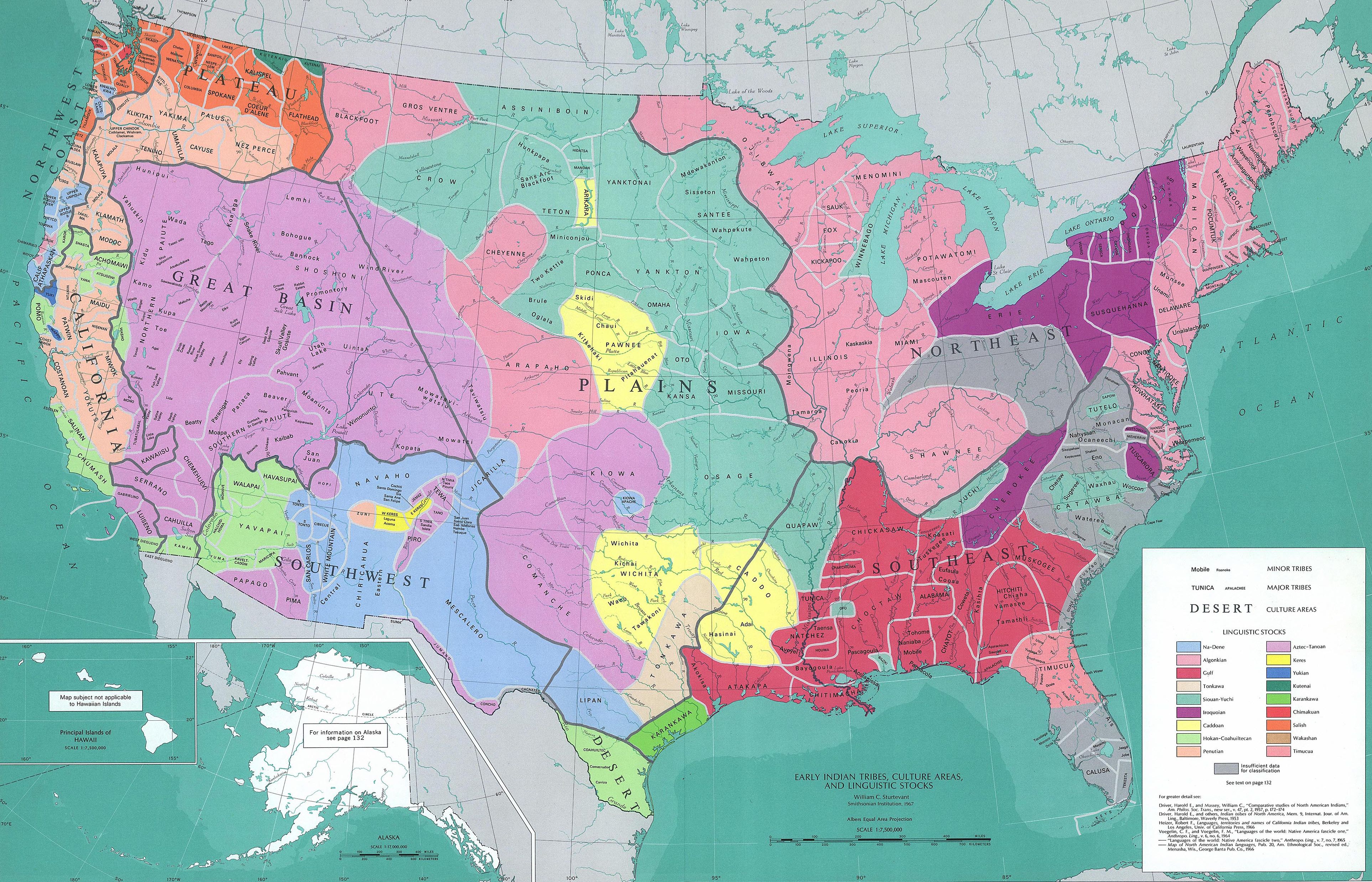
Conflicts generally known as "Indian Wars" broke out between American government and Native American societies. The Battle of Little Bighorn (1876) was one of the greatest Native American victories. Defeats included the Creek War of 1813-14, the Sioux Uprising of 1862, the Sand Creek Massacre (1864) and Wounded Knee in 1890.[68] These conflicts were catalysts to the decline of dominant Native American culture. By 1872, the U.S. Army pursued a policy to exterminate all Native Americans unless or until they agreed to surrender and live on reservations "where they could be taught Christianity and agriculture."

Of course. How the hell did the savages get by for 20,000 years, before whitey showed up, without knowing a damn thing about agriculture?

This land is your land, this land is my land
From California to the New York Island
From the Redwood Forest to the Gulf Stream waters
This land was made for you and me.


This land is my land, it is not your land
I've got a shotgun, and you don't got one
I'll blow your head off, if you don't get off
This land was made just for me.


You sure about that? Or do you just want the portion of it back that benefits you at the expense of others?

Tuesday, August 11, 2009

Our Biggest Problem (What? Only One??)

Your morning dose of reality as seen through the eyes of Bob Herbert, op-ed columnist for the New York Times.
Some 247,000 jobs were lost in July, a number that under ordinary circumstances would send a shudder through the country. It was the smallest monthly loss of jobs since last summer. And for that reason, it was seen as a hopeful sign. The official monthly unemployment rate ticked down from 9.5 percent to 9.4 percent.

But behind the official numbers is a scary story that illustrates the single biggest challenge facing the United States today. The American economy does not seem able to provide enough jobs — and nowhere near enough good jobs — to maintain the standard of living that most Americans have come to expect.

I've already come to terms with the fact that our standard of living is as unsustainable as our current health care system. But that doesn't have to translate into a tragedy. Some of us, perhaps most of us, are going to need to make adjustments in our "American Dream."

But what is really shocking about the current unemployment situation is the impact on younger Americans and especially minorities (well, that part isn't shocking at all; it's the status quo, just on a larger scale).
Only 65 of every 100 men aged 20 through 24 years old were working on any given day in the first six months of this year. In the age group 25 through 34 years old, traditionally a prime age range for getting married and starting a family, just 81 of 100 men were employed.

For male teenagers, the numbers were disastrous: only 28 of every 100 males were employed in the 16- through 19-year-old age group. For minority teenagers, forget about it. The numbers are beyond scary; they’re catastrophic.

This should be the biggest story in the United States. When joblessness reaches these kinds of extremes, it doesn’t just damage individual families; it corrodes entire communities, fosters a sense of hopelessness and leads to disorder.

And I can't help but wonder how involved these age groups are in the critical health care debate. I fear the entire dialogue is being driven by those baby-boomers who have been paying attention and have seen the rampant inflation in the health care sector, and have experienced the costs first-hand, and the baby-boomers on the right who are having their fears stoked by various media figures and right-wing fringe elements throwing up the socialist red scare all over again.

America's youth need to be paying attention and getting involved now. Health care needs for those in their 20s may seem to be a low-priority (perhaps a couple of rungs below the crisis of Twitter being hacked) right now, but this is an opportunity to influence the debate and help shape a system on which they will depend in another 15 years or so.

I know, I know. I'm dreaming again. That is about as likely as Dennis Kucinich winning the 2012 Democratic nomination.

Monday, July 13, 2009

The Bright Side to Economic Calamity

I'm glad to see prison reform and tough sentencing guidelines for low-level offenders being tossed away in favor of more sensible -- and less costly -- solutions. I'm just not sure why it takes a devastated economy to put that into place. I suspect this is indeed a reflection of the economic realities rather than a concrete change in philosophy.

Once the economy turns around it will be interesting to see if we return from whence we came -- back to ridiculously long prison sentences for mere possession.
Cash-strapped states are increasingly turning to alternative sentencing methods and to streamlined probation and parole as a way to keep low-level offenders out of prison and in their communities.

[...]

The measures include drug courts, which allow low-level drug offenders to avoid prison time through treatment and intense, personal, weekly intervention by a judge, and at least 500 courts for people arrested for driving while intoxicated. Drivers avoid jail by attending regular alcohol-treatment classes and by submitting to random tests.

States have also begun to shorten probation and to reduce the number of people sent to prison for technical violations, such as missing appointments.

[...]

These trends are showing up almost everywhere as a direct response to governors and state legislatures looking with alarm at prison costs eating up increasing shares of their budgets. According to Adam Gelb, director of the Public Safety Performance Project for the Pew Center on the States, more than half the states and the District are trying to reduce the growth in their prison populations through alternative sentencing and through new probation and parole procedures.

Surprisingly, this is happening even in Texas, although our current track record hardly qualified as progressive.
But what is striking, experts say, is how some states with reputations for being tough on crime are most rapidly embracing these policies, which might have once been dismissed as the product of liberal think tanks and soft-on-crime leniency.

Texas is a case in point. From 1978 to 2004, the inmate population rose 573 percent and the state's population increased 67 percent. With hard sentencing laws and some conservative judges, Texas built a "lock 'em up" reputation. The state has more than 155,00 inmates and leads the nation in putting prisoners to death.

But two years ago, Texas officials were faced with an alarming projection: By 2012, the state would need 17,000 more beds, which would mean building eight prisons at a cost of nearly $1 billion.

State Rep. Jerry Madden, a self-described conservative Republican, had just taken over as chairman of the Texas House committee on corrections. "I started asking questions," he said in a phone interview. To avoid building more beds for more prisoners, Madden said, "You either got to slow 'em going in, or speed 'em going out. And Texas is not a state that says, 'Speed 'em up going out.' "

[...]

The changes, implemented in the 2007 legislative session, included more funding for drug and DWI courts. New rules shortened the average probation time from 10 years to five. With about 445,000 people on probation, the system had become "the Number One feeder to the prison system," said Ana Yáñez-Correa, executive director of the Texas Criminal Justice Coalition, a progressive group.

The state also ordered the parole board to raise its parole rate to an earlier number of 31 percent; the proportion of eligible inmates granted parole had slipped to 26 percent.

With those changes in place, prison population growth slowed to a trickle. From January 2007 until December 2008, Texas added 529 inmates to its total, a tenth of what was projected.

It's enough to make me hope the economy doesn't improve. Because tough times seem to be the only time we come to our senses. And that's rather pathetic.

Sunday, February 01, 2009

A Post-Bailout Revamped GM

Yesterday I got a credit card statement with a few extra fliers in it, one of which was this little piece from GM promoting their all new fuel-efficient green technological marvel .... Hummer!

I mean, seriously, what the flying fuck? I don't know how else to respond.


Because the vast majority of Americans need this vehicle since we are constantly like, you know, driving in the woods and over huge boulders and shit.

Thursday, December 25, 2008

The Slay Bells Are Ringing

Only in the USA would something like this happen.
In a bizarre Christmas Eve rampage in a Los Angeles suburb, a 45-year-old man in a Santa Claus outfit opened fire at a group of revelers in a house that moments later went up in flames, killing at least five people and injuring several others, the authorities said on Thursday.

[...]

The frenzied shooting, which may have been prompted by a marital dispute, occurred just before midnight Wednesday at a two-story home on a cul de sac in Covina, a suburban town about 22 miles east of Los Angeles.

Oh yeah, that sanctity of marriage thing again. Explain it to me cause I'm still not gettin' it.

Thursday, December 11, 2008

Message to GM: File For Bankruptcy. I Dare Ya.

It's funny how the last two election cycles have been all about the gains of Democrats and yet Republicans still seem to have control. The auto industry bailout may be dead.
The prospects of a $14 billion government rescue of the American auto industry seemed to vaporize Thursday morning as the Senate Republican leader, Mitch McConnell of Kentucky, spoke out forcefully against the bill, effectively dooming its chances despite the urgings of the White House.

Gee, only $14 billion? That's only $5 billion more than what we'd spend to continue production of those unnecessary F-22s I caught hell for trying to kill off yesterday.

I have differing degrees of disgust with bailouts, even when they might be necessary, or worth the risk. The banking industry? That pissed me off. The auto industry? I'm wishy-washy. I'd be strongly in support if there were an ironclad guarantee the bailout money would be used to completely restructure the industry, and not just maintain the status quo for another year. Still not thrilled with bailouts, but if the doom & gloom predictions by some are correct, this could get ugly and we'd find out pretty quick. And maybe the Republicans have taken us a step closer to finding out for sure.
“A lot of struggling Americans are wondering where their bailout is,” Mr. McConnell declared.

Yeah, Mr. McConnell, where is it?

If I wasn't just taking a quick break from work to post this, I'd do some research and find out how many times Mr. McConnell has voted against increases in the minimum wage, and other support for those struggling.

If any readers have data, drop it in the comments. (Kelly might be able to pull that number off the top of her head.)

Monday, December 01, 2008

Just How Smart Is Wall Street?

Anyone with half a brain has known for months that we're in a recession...
The evidence of a recession has been widespread for months: slower production, stagnant wages and hundreds of thousands of lost jobs.

But the nonpartisan National Bureau of Economic Research, charged with making the call for the history books, waited until now to make it official — and the announcement came on a day when the American stock market fell nearly 9 percent in a single session.

As usual, the "profit-takers" were to blame....
The sharp declines on Wall Street — the Dow Jones industrial average dropped 679.95 points or 7.7 percent — appeared more about profit-taking than the economy. Investors have long assumed that the country was in recession, and analysts said that after last week’s gains, including the biggest five-day rally in decades, a sell-off was to be expected.

Is it just me, or is this entire system just a tad bit, oh... how shall I phrase this without offending the sensibilities of my readers... fucked up the ass?

And speaking of which, weren't some investors fucked up the ass by these "profit-takers" who keep buying and selling like they were playing with Monopoly money? That's the thing I don't understand about the markets. When I hear that x trillion dollars has vanished from the markets in x number of months, I keep wondering, how does a trillion dollars vanish?

Oh, it's down there somewhere. Let me go down and take another look. Because I'm the dude.


I have a hunch the people getting fucked up the ass are you and me. Investors who don't respond to every blip every minute of the trading day. As if we had time for that. I didn't even know the market had plunged until I started writing this post. Sorry, but I was working too damn hard for my living.

Excuse the fuck out of me.

My 100-Cents Worth

The US Mint is working on another design in a series of the dollar coins which most people have never seen unless the have used a vending machine at the post office which dispensed an amount of change greater than a dollar.

Austin has been selected as one of the cities where the dollar coins are being aggressively marketed. I've heard a number of promotional ads on the radio for the coins. And all this strikes me as odd. The United States Mint has faced a steep uphill acceptance battle ever since is released a redesign of the $2 bill back in the 1970s.

The government is spending money to persuade people how cool it is to use the new dollar coins, and expecting them to go the extra mile to visit a bank and request them and spend them, only to have them tossed in the back of the till by merchants and ultimately returned to the banks where the process theoretically renews itself.

This is a foolish waste of money and it won't work. Furthermore there is an easy solution to this problem which would require far less marketing and would save us $318 million annually. Maybe.

The obvious logical solution is to phase out the paper dollar entirely which would result in dollar coins being put to use immediately. The paper dollars have a very limited lifespan of just a few months whereas the coins last many years thus offsetting their higher production cost.

Of course, konagod always like to stir the pot even more. I would utilize the $2 bills to replace the dollar bills. There are millions of them printed already, sitting in vaults. What a waste. And what's the point? Sometimes I think we like to print currency and mint coins just for the hell of it.

If a dollar coin and a $2 bill still don't provide you with enough spending variables, well, there's always the half-dollar which weighs probably twice as much as the dollar coins, and for some odd reason is still being minted.

Corn, beans and squash — the “three sisters” of Native American agricultural tradition — will appear on the nation’s one-dollar coins next year, in a design to be announced Friday by the United States Mint.

By the dictates of an act that Congress passed last year, the reverse side of the gold-colored Sacagawea dollars will bear a new design each year starting in 2009, as part of a thematic series showing Native American contributions to the history and development of the United States.


Another day, another dollar.

Sunday, November 16, 2008

A Worthy Tax

You don't hear me pushing for higher taxes very often. I try to avoid paying sales taxes (even though I know they help the state and local communities) by ordering online as much as possible. And federal taxes are on a lower rung of my ladder because of how many of those tax dollars are spent.

However, I would not be against a variable gas tax, especially if the proceeds were used not just for a bailout of the auto industry, but to remove the bloat in that industry and force them to start producing high-quality, fuel-efficient vehicles which would clearly be in demand if we knew gas was never going to cost less than $3.50 a gallon.

I've been an advocate of this idea since at least 1980 when I suggested we should add a $1.00 per gallon tax on top of what was then a $1.20 gallon of fuel for two reasons: reduced consumption to wean us from imported oil, and as a source of funding for alternative transportation methods and building more efficient cars.

Twenty-eight years later, here we are. Daniel Sperling and Deborah Gordon, writing in today's New York Times, have the right idea.

The best bailout is one that weans us off oil and sets us on a path to reduced carbon emissions. Congress and President-elect Barack Obama are not qualified to protect shareholders’ interests, nor can they build a better car. But they can ensure that society benefits from our investment in the automobile industry.

One way to do that would be to establish a price floor of $3.50 per gallon on gasoline. If the price drops below that, as it recently has, the federal government would impose a variable tax to bring the price up to $3.50. If the price goes above $3.50, then the tax disappears. The money raised by the variable tax would be used, at least in the short term, to provide loan guarantees to the auto companies. (To ease the burden of higher gasoline prices on low-income taxpayers, some of the revenue would be provided to them as tax credits or vouchers.)

[...]

At current prices, a floor of $3.50 per gallon would generate more than $17 billion in one month — a big chunk of a $25 billion bailout. If, without the floor, gasoline averaged $2.50 per gallon over the next year, revenues would amount to $140 billion. That money could pay for a sound transportation policy agenda beyond the bailout.

I think we have demonstrated we can live with a $3.50 gallon as most of us were paying more than that in late summer. It's a tight fit financially for those struggling, and there are ways to provide assistance to those people truly in need.

With prices at the pump currently hovering just above $2.00 per gallon it would be an ideal time to bite the bullet and make a genuine effort to get ourselves out of this mess.

Meanwhile, Chevrolet is planning to introduce the Volt in 2010.
The Volt, which the company plans to begin selling in November 2010, should easily double the fuel economy rating of today’s mileage hero, the Toyota Prius. The Prius, which carries a 46 m.p.g. rating in combined city and highway driving, is a conventional hybrid that uses modest amounts of electricity to minimize the fuel consumed by its gasoline engine.

The Volt takes the opposite approach, relying mainly on electric power, with its gasoline engine running only when needed to stretch the driving range. The 100 m.p.g. automobile, which once seemed an impossible dream, will become an official E.P.A.-rated reality with the Volt’s arrival.

It's a shame GM didn't roll this thing out in 2007. Had they done so, maybe a bailout wouldn't have been quite so urgent.

Tuesday, November 11, 2008

The Icing on the Political Cake

Not only did we make history on this day last week, we elected the better team to move us forward. And we unearthed some rather ugly facts about the electorate which hails from what I call America's red vein.


Fear of the politician with the unusual name and look did not end with last Tuesday’s vote in this rural red swatch where buck heads and rifles hang on the wall. This corner of the Deep South still resonates with negative feelings about the race of President-elect Barack Obama.

The New York Times provides us with some visual imagery. No offense intended to hunters and fishermen (or is it fisherpeople?) who happen to have supported Obama I'm sure.


The idea of a "waning" South has me as excited as the outcome of the election. And it's about damn time.
The region’s absence from Mr. Obama’s winning formula means it “is becoming distinctly less important,” said Wayne Parent, a political scientist at Louisiana State University. “The South has moved from being the center of the political universe to being an outside player in presidential politics.”

[...]

Alabama, for example, experienced a heavy black turnout and voted slightly more Democratic than in 2004, but the state over all gave 60 percent of its vote to Mr. McCain. (Arkansas, however, doubled the margin of victory it gave to the Republican over 2004.)

[...]

By leaving the mainstream so decisively, the Deep South and Appalachia will no longer be able to dictate that winning Democrats have Southern accents or adhere to conservative policies on issues like welfare and tax policy, experts say.

That could spell the end of the so-called Southern strategy, the doctrine that took shape under President Richard M. Nixon in which national elections were won by co-opting Southern whites on racial issues.

All I can do is applaud and shout, "good riddance" to that negative and racist influence. I do not understand how some of these people even get through the day. What a miserable and pathetic life.
One white woman said she feared that blacks would now become more “aggressive,” while another volunteered that she was bothered by the idea of a black man “over me” in the White House.

Sunday, November 09, 2008

How Arkansas Screwed the Children

One thing we're all seeing up close and personal is just how dirty things get when religion gets mixed with politics.


It was true in California with Prop 8 and it is true in the passage of a proposition in Arkansas banning unmarried couples from adopting children or being foster parents. And gee, who are the vast majority of the unmarried couples?

A New York Times article today cites antipathy toward Obama as a major reason the amendment passed by such a majority, despite the fact that 55% of those polled were against it.
The measure, which voters overwhelmingly approved Tuesday and which prevents unmarried cohabitating couples from adopting or fostering children, won strong support from conservatives, exit polls found. The ban affects all unmarried couples but was written with the intent of preventing gay couples from raising children in Arkansas.

Unlike most states, Arkansas shifted to the right politically in this election. Senator John McCain won the state by 20 points compared with President Bush’s nine-point victory in 2004.

How in the bloody hell can a state have antipathy at such a critical moment in our history? I guess the voters were just preoccupied with other matters of importance. Whatever.

I certainly don't think Jesus would approve of the tactics nor the misuse of the church for political purposes.
A survey in October by the University of Arkansas found 55 percent of voters in the state opposed to the ban. But conservatives ratcheted up their lobbying before the election, distributing 350,000 inserts for church bulletins, and the measure passed with nearly 57 percent of the vote.

How very.. um... Taliban. And how very sad for the children.
Arkansas has three times as many children who need homes as people willing to adopt or foster them, said Brett Kincaid, campaign director for Arkansas Families First, a coalition of groups opposing the ban.

Religion and politics don't mix. When they do, somebody is gonna get fucked without any lovin' as my grandma used to say. I'm paraphrasing just a bit. Better to leave the children without homes than to have them living with the dirty godless faggots.

Crossposted at B3

Wednesday, November 05, 2008

The New York Times Got It Half Right

I was taken by the headline in today's New York Times (see post below): "Racial Barrier Falls In Heavy Turnout." I suppose they meant overall. Actually, it seems to me a racial barrier was actually raised across a swath of the Bible Belt.

Let's use Arkansas as an example, since that's where I'm from and I know the political landscape pretty well. In simple terms you can draw a line from northeast to the southwest and the northwest half is more Republican, while the southeast half leans more heavily to Democrats.

In terms of congressional districts, there are four. The only one represented by a Republican is district 3 in the northwest corner which is Wal-Mart country. That area has experienced phenomenal growth in the past 15 years, and in percentage terms represents one of the fastest growing areas of the country. Apparently that influx of new residents is comprised of more Republicans!

Take a look back at this time last year when Arkansas had such deep dissatisfaction with the Bush administration that it was as blue as a northeast or west coast state.


This actually gave me hope that Arkansas, which used to be considered a swing state, would swing to the Democrats this time around. Unfortunately, that was not the case. In fact, it went heavier for the Republican ticket than I have ever seen in my lifetime. Some counties went over 70% for McCain which is on par with Utah!

By using the nifty interactive maps from the New York Times, I now present you with a demonstration of just how far Arkansas is going away from the national trend.

Start with 1992 when Bill Clinton was running against George Herbert Walker Bush. Sure, Clinton was the home state boy, but Bush managed to carry the hardcore Republican counties. And Clinton carried the state in that year by 53.2%.


Jump ahead to 1996. The cum stains on Monica's blue dress may have cost him a few more counties which swung Republican, but Clinton's overall percentage actually increased a fraction from 1992. And maybe Bob Dole was appealing to those Arkansans who are more mid-western than southern. Northwest Arkansas is only a hop, skip and a jump from the Kansas state line.


In 2000 with Bill Clinton out of the picture, we start to get a more realistic view of a typical Arkansas voting pattern. George W. Bush of neighboring Texas prevailed over Al Gore of neighboring Tennessee by 51% to 46%.

In 2004 is when things get really interesting. Four years of Bush wasn't enough to get Arkansas to vote for a damn Massachusetts Yankee, even with John Edwards on the ticket. Bush jumped to 54% to Kerry's 44%. And a bit more blue disappeared.


Here we are in 2008. While most of the rest of the nation went for change, and told the Republican Party enough already, the Bible Belt deep south and a few others went wildly in the opposite direction. What happened to that "blue" Arkansas from 2007 when the voters were so overwhelmingly disgusted with the Bush antics?

I guess having that Negro on the ticket was just too much to swallow for most. A state with two Democrats in the U.S. Senate, one being a woman, and three of four U.S. Representatives being Democrats, gives John McCain from non-neighboring Arizona and Sarah Palin from a state which doesn't even border the rest of the US, a margin of victory exceeding that of Arizona or Texas! McCain carried Arkansas by a greater percentage than he did in Phoenix, and Obama even managed to carry Tucson.

Hell, McCain's margin in Arkansas was even greater than in Mississippi! But they've got more black folk over there. So that explains that.


I don't even recognize my home state these days. The blue is steadily disappearing while racism apparently is not going anywhere.

Go play with the interactive maps and see what you find. Although I am thrilled with the overall election results, I'm still rather nauseated by what I see when scratching just beneath the surface of it all.

And see that second county up from the bottom right? That's my home county. It will always be blue.

Sunday, November 02, 2008

What's Up With These People?

The Undecideds.

Let's say the Republican nominee is Susan Collins instead of John McCain. Then I could understand this concept of being undecided.
“I do not like being an ‘undecided,’ ” said a sheepish Doug Finke, a 66-year-old executive at an international relocation service in Louisville, Ky. “Last time at this point, I definitely was decided. Not this time. I find it unnerving.”

Mr. Finke, a Republican, voted twice for George W. Bush. He describes himself as an economic conservative and said he had been “very impressed” with Senator John McCain. It sure sounds as if Mr. Finke is leaning toward Mr. McCain, the Arizona Republican, right?

Not so fast.

“I’m socially more liberal,” Mr. Finke said. “I think Obama is bright and has been very steady in this campaign.” He added that it would be “very exciting for the United States to elect a black president.” Besides, he does not think Mr. McCain’s running mate, Gov. Sarah Palin of Alaska, would be ready to step into the top job if something happened to Mr. McCain (who, Mr. Finke pointed out, “is pretty old”).

Where does this leave Mr. Finke? “I plan on doing a lot of reading this weekend,” he said.

Enjoy your weekend, Mr. Finke. I'm really glad I'm not wrestling with the big question.

Mr. Finke's wife is in the same (swift)boat.
“I’d say I’m leaning towards McCain,” she said. “For as awful as things are with this Republican administration, there’s something about the whole conservative thing that appeals to me.” Put her down as “leaning McCain” then.

“But maybe I’ll vote for Obama,” she said. “How many days are left?”

The "whole conservative thing?" Normally, that article in today's New York Times would have simply infuriated me. For some odd reason I find it humorous today. This allegiance to nebulous labels is actually quite funny.

How do I feel today? Well, I love red, but I'm feeling a little blue streak. I may vote blue, but gosh, I sure would love some more red. I'm not sure if eight years of red was enough. Blue sure looks nice though.

Holy crap. I'm now counting the hours until this is over.